Most older adults want the same thing: to stay in their own home, in their own neighborhood, on their own terms. And most of the time, the difference between staying and having to move is not a medical event. It is a fall. Falls are the leading cause of injury among older adults, and the majority happen at home, in rooms the person has walked through ten thousand times.
Here is the encouraging part: most of what makes a home risky is fixable, and most of the fixes are small and inexpensive. You do not have to renovate the house. Work through it room by room with this checklist, and you will remove the majority of the risk in a weekend or two.
Start Everywhere: The Whole-House Basics
Before individual rooms, sweep the whole house for the universal hazards:
- Secure or remove loose rugs, and tape down or remove any curling carpet edges
- Clear walking paths of cords, clutter, low furniture, and anything that lives on the floor
- Improve lighting everywhere, brighter bulbs make an immediate difference, and add night lights along the bedroom-to-bathroom route
- Make sure stairways have solid handrails, ideally on both sides, and light switches at top and bottom
- Check that smoke and carbon monoxide detectors work and are within their lifespan
The Bathroom: The Highest-Risk Room
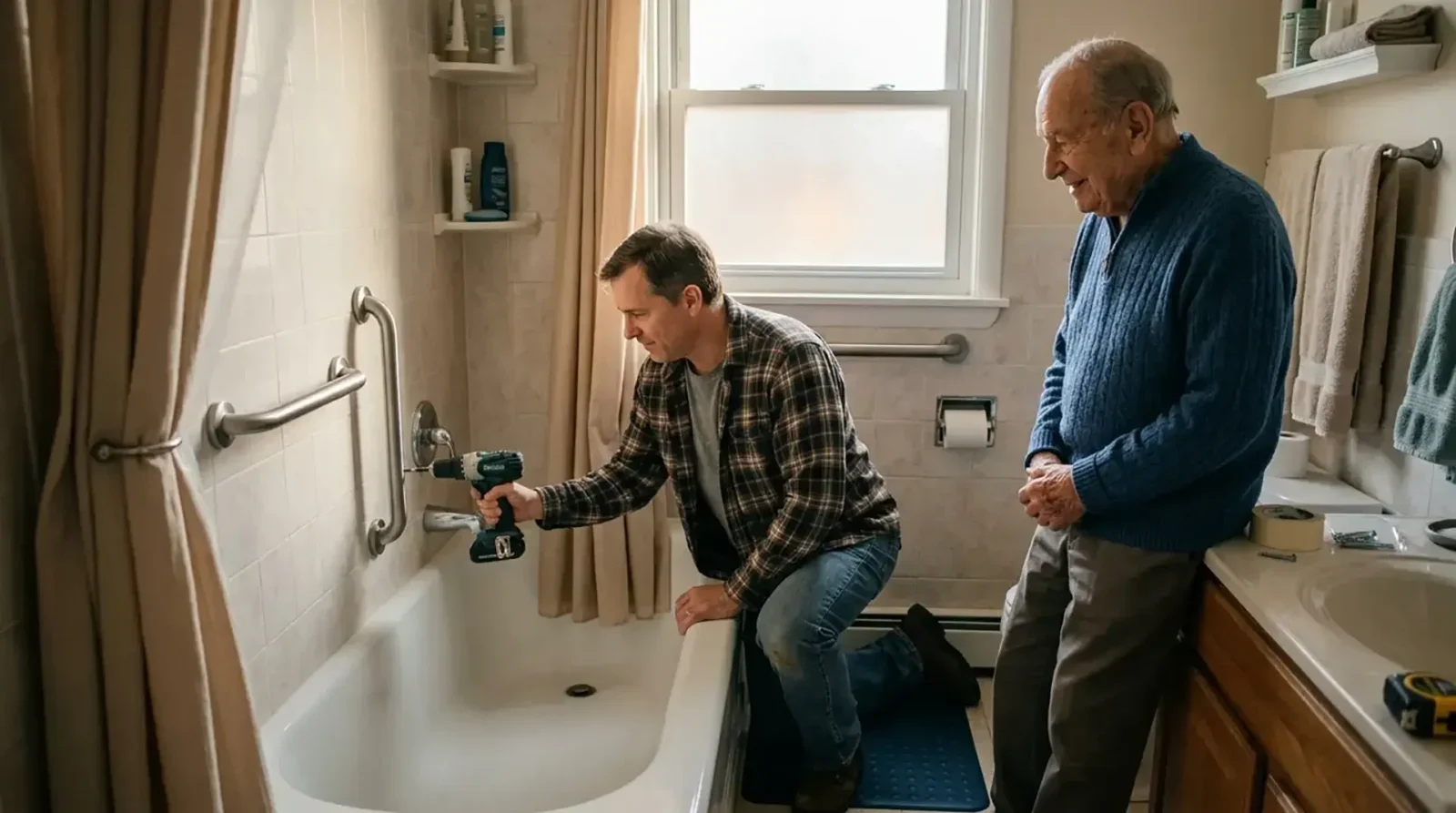
Wet, hard, and slippery: the bathroom is where the most serious falls happen, so it gets the most attention.
- Install grab bars at the toilet and in the tub or shower (towel bars are not grab bars, and they fail exactly when someone grabs them)
- Add non-slip mats or strips inside the tub and on the floor beside it
- Consider a shower chair and a handheld shower head, which turn a risky standing task into a safe seated one
- A raised toilet seat helps anyone who struggles with sitting and standing
- Keep a night light on: many falls happen on nighttime bathroom trips
The Kitchen
- Move everyday items to waist and shoulder height, so daily life does not require a step stool
- If a step stool is truly needed, make it a sturdy one with a handle, and retire any chairs-as-ladders
- Wipe spills immediately, and consider a non-slip mat at the sink
- Check that the stove has clear reminders or automatic shutoff if forgetfulness is part of the picture
The Bedroom
- A lamp or switch reachable from the bed, so nobody crosses a dark room
- A clear, lit path from bed to bathroom
- The bed at a height where feet reach the floor when sitting on the edge
- A phone or alert device within reach of the bed
Stairs, Hallways, and Entryways
- Handrails on both sides of any stairs, checked for sturdiness
- Good lighting with switches at both ends, and contrast tape on step edges if vision is an issue
- At entry doors: a step-free option if possible, railings at outside steps, and good exterior lighting
- In Central New York especially, a winter plan: who clears the snow and ice, and a sturdy mat inside every door for wet shoes
Beyond the Checklist: Matching the Home to the Person
A generic checklist catches generic risks. The real question is always specific: what does this person, with their particular balance, vision, memory, and habits, need in this particular house? That is what a professional home safety assessment answers. It looks at how your loved one actually moves through their day and prioritizes the changes that matter most for them, so you are not guessing.
At Reflections, home safety assessments are one of the most immediately useful things we do for Central New York families, often as a first step in aging-in-place planning. If your loved one is in the Rochester area, our Aging Well Rochester team offers the same on the ground there.
Frequently Asked Questions
What are the most important home safety fixes?
Removing trip hazards, adding grab bars and better lighting, and making the bathroom safer. Falls are the biggest risk, and most of the fixes are simple.
Do we have to renovate the whole house?
No. Many of the most effective changes are small and inexpensive, like securing rugs, adding night lights, and clearing walking paths.
How do I know what my parent actually needs?
A home safety assessment looks at the specific home and the specific person, so you are not guessing. We can do that with you.
A Safer Home Is a Longer Stay
A safer home is often the difference between staying put and having to move. We can walk the home with you and prioritize what matters. Reach out to the Reflections team at 315-497-7200 or send us a message .